A/C plumbing repair
Car A/C Hose Repair & Replacement
A/C hoses carry refrigerant and lubricant between components. Cracks, deteriorated rubber, damaged fittings or leaking crimps allow the sealed system to lose its charge.
We locate the leak, inspect the complete hose assembly and determine whether repair, remanufacture or replacement is appropriate.
Why hoses fail
Flexible lines work under pressure, heat and vibration.
Automotive A/C hoses transfer refrigerant and oil while accommodating engine movement and vehicle vibration. Age, abrasion, corrosion and heat can damage the rubber, crimps or alloy fittings.
Oil residue may indicate the general leak area, but pressure and trace-gas testing helps confirm the actual source before the hose is removed.
Why inspection comes first →Hose repair process
From leak confirmation to system test
The appropriate repair depends on the hose construction, failed area and availability of complete replacement assemblies.
01 Locate the leak
Confirm whether refrigerant loss comes from the hose, crimp, fitting or nearby seal.
4 points
Locate the leak
Confirm whether refrigerant loss comes from the hose, crimp, fitting or nearby seal.
- Inspect for oil residue and abrasion
- Hydrogen trace-gas test the assembly
- Check crimps and flexible sections
- Inspect seals, service ports and adjacent components
02 Assess repair options
The existing assembly and vehicle application determine what is suitable.
5 points
Assess repair options
The existing assembly and vehicle application determine what is suitable.
- Check hose and fitting condition
- Assess corrosion or physical damage
- Compare repair and replacement availability
- Identify reusable hard-line sections
- Confirm routing and clearance requirements
03 Repair or replace
The approved solution restores a correctly routed and sealed refrigerant line.
5 points
Repair or replace
The approved solution restores a correctly routed and sealed refrigerant line.
- Recover refrigerant before opening the circuit
- Remove the damaged hose assembly
- Repair or replace using compatible materials
- Renew required seals and O-rings
- Secure the line away from heat and abrasion
04 Test and recommission
The completed line is checked before and after recharge.
5 points
Test and recommission
The completed line is checked before and after recharge.
- Pressure test the repaired circuit
- Vacuum and confirm system integrity
- Recharge to vehicle specification
- Inspect the repair under operation
- Verify cooling performance
Important: Not every hose or fitting is suitable for remanufacture. Safety, refrigerant compatibility and vehicle clearance determine the repair method.
Targeted hose repairs
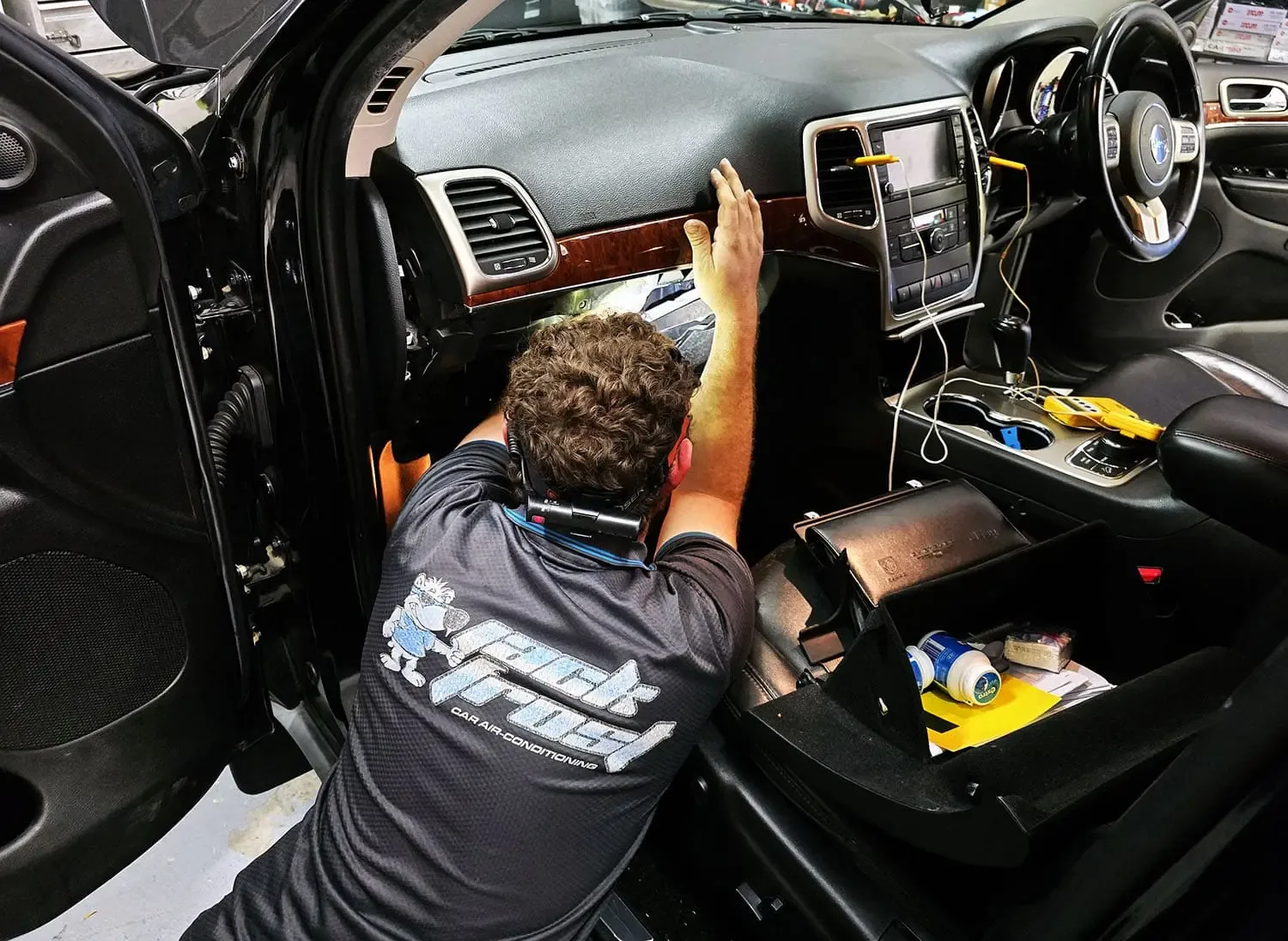
A confirmed hose leak can often be addressed without replacing unrelated components.
Accurate leak location allows the quote to focus on the failed line, fitting or seal while checking whether age or rubbing has affected nearby sections.
Materials must suit automotive refrigerant and lubricant.
The repaired line must remain clear of heat, sharp edges and moving parts.
After repair, the system is pressure-tested, evacuated, recharged and checked for cooling performance.
Common questions
A/C hose repair FAQs
Clear answers before you book your vehicle with our specialist workshop.
View all FAQs →Can an automotive A/C hose be repaired?
Some assemblies can be remanufactured or repaired, while others require complete replacement. The construction and failed area determine suitability.
How do you confirm the hose is leaking?
We use visual inspection, pressure testing and hydrogen trace-gas detection around the hose, crimps, fittings and seals.
Does the system need a regas afterward?
Yes. Opening the circuit requires recovery, vacuum testing, the correct refrigerant charge and final performance checks.
Can you quote from a photo?
A photo may help identify the line, but an accurate repair quote depends on leak confirmation, vehicle details and hose condition.
Start with the right diagnosis
Book your 24-Point A/C Inspection.
Every service starts by checking what the system actually needs. Bring your vehicle to our Mount Gravatt East workshop for a clear diagnosis and the right next step.