
Cabin heating and HVAC repair
Heater Core Replacement
The heater core transfers engine coolant heat into cabin air. A blockage or leak can cause poor heating, coolant odour, misting windows or wet carpet.
Because the core is often behind the dashboard, we confirm the fault and access requirements before recommending replacement.
How the heater core works
A small radiator provides heat inside the cabin.
Engine coolant flows through the heater core. The blower moves air across its fins and into the cabin when heating is requested.
Old coolant and corrosion can restrict the narrow tubes, while leaks can release coolant inside the HVAC case. Because coolant is toxic and can damage trim or electrical parts, persistent leakage should be investigated promptly.
Why inspection comes first →Heater-core diagnosis
The two major heater-core failure types
Testing distinguishes restricted coolant flow from an active leak and checks related cooling-system causes.
01 Internal restriction or clogging
Restricted coolant flow reduces the heat available to the cabin.
4 points
Internal restriction or clogging
Restricted coolant flow reduces the heat available to the cabin.
- Poor or uneven heater output
- Temperature difference across heater hoses
- Debris or neglected coolant condition
- Restricted internal core passages
02 Coolant leakage
A leaking core can release coolant into the HVAC case or passenger area.
5 points
Coolant leakage
A leaking core can release coolant into the HVAC case or passenger area.
- Sweet coolant smell inside the cabin
- Windows fog or develop an oily film
- Wet carpet near the HVAC case
- Unexplained coolant loss
- Cooling-system pressure drops
03 Related system checks
The wider engine cooling and HVAC systems can produce similar symptoms.
5 points
Related system checks
The wider engine cooling and HVAC systems can produce similar symptoms.
- Check coolant level and condition
- Inspect accessible hoses and connections
- Assess thermostat and engine temperature behaviour
- Check blend-door and blower operation
- Pressure test the cooling system
04 Replacement and restoration
Access and reassembly depend heavily on vehicle design.
5 points
Replacement and restoration
Access and reassembly depend heavily on vehicle design.
- Drain coolant safely
- Remove dashboard or HVAC components as required
- Replace core and associated seals
- Refill and bleed the cooling system
- Test heating, controls and cooling-system integrity
Important: If coolant is leaking inside the cabin, avoid prolonged exposure and have the vehicle inspected promptly.
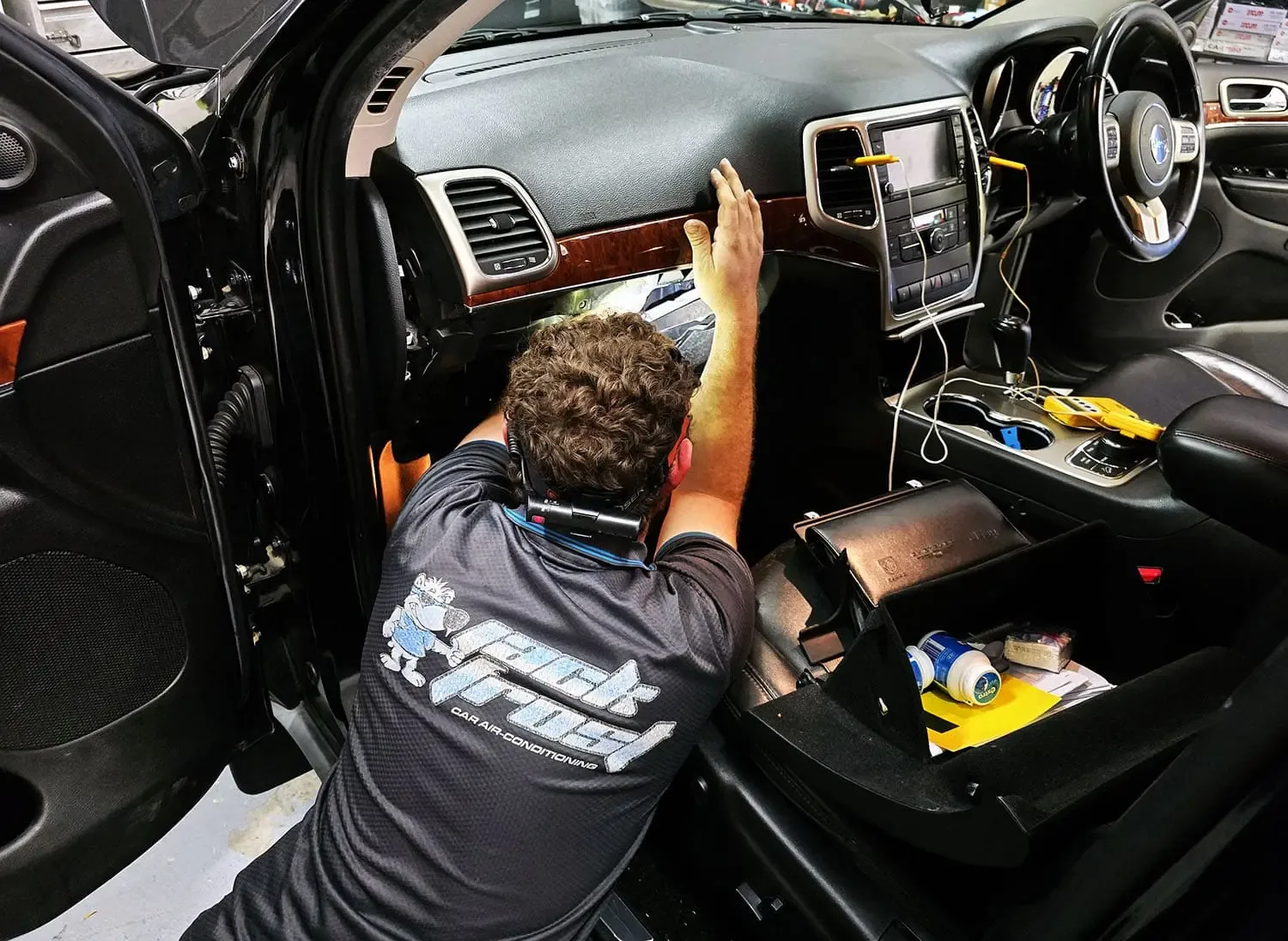
Hidden behind the dashboard
Access is often the largest part of the repair.
On many vehicles the dashboard and HVAC case must be carefully disassembled. The quote reflects the exact vehicle layout, not only the price of the core.
Trim, wiring and electrical components must be handled carefully.
Coolant is refilled, bled and pressure-tested after repair.
Some vehicles provide easier under-bonnet access, so inspection and vehicle identification are essential.
Common questions
Heater core FAQs
Clear answers before you book your vehicle with our specialist workshop.
View all FAQs →What does the heater core do?
It transfers heat from engine coolant into air moved through the cabin ventilation system.
What are common signs of a leak?
Coolant odour, misting windows, wet carpet and unexplained coolant loss are common warning signs.
Why is replacement expensive on some vehicles?
The heater core is often inside the HVAC case behind the dashboard, requiring substantial labour to access.
Can a blocked heater core be flushed?
Some restrictions may respond to flushing, but a leaking, severely corroded or internally damaged core requires replacement.
Start with the right diagnosis
Book your 24-Point A/C Inspection.
Every service starts by checking what the system actually needs. Bring your vehicle to our Mount Gravatt East workshop for a clear diagnosis and the right next step.