
Front-of-vehicle A/C component
Car A/C Condenser Replacement
The condenser removes heat from the refrigerant and sits in a vulnerable position at the front of the vehicle, where damage, blockage and leaks can affect cooling.
We confirm whether the condenser itself has failed and check the fan, airflow and connected system before recommending replacement.
What the condenser does
Efficient cooling starts at the front of the vehicle.
Hot high-pressure refrigerant enters the condenser, where airflow removes heat and allows it to change state. Bent fins, debris, impact damage, internal restriction or inadequate fan operation can interfere with that process.
Because condenser symptoms overlap with refrigerant, compressor and fan faults, replacement should follow pressure testing and inspection—not assumption.
Why inspection comes first →Condenser diagnosis
Faults we check before replacement
The assessment separates a leaking or restricted condenser from supporting airflow and system faults.
01 Leak and impact damage
The front-mounted condenser is exposed to stones, debris and collision damage.
4 points
Leak and impact damage
The front-mounted condenser is exposed to stones, debris and collision damage.
- Inspect fins, tubes and end tanks
- Check for oil residue and refrigerant leaks
- Assess bent or crushed sections
- Check connected seals and fittings
02 Airflow and fan operation
Insufficient airflow can cause poor performance even when the condenser is intact.
4 points
Airflow and fan operation
Insufficient airflow can cause poor performance even when the condenser is intact.
- Check condenser fan operation
- Inspect for external debris and blocked fins
- Assess cooling at idle and low vehicle speed
- Confirm surrounding airflow is unobstructed
03 Restriction and contamination
Internal blockage can produce abnormal pressures and may follow compressor failure.
4 points
Restriction and contamination
Internal blockage can produce abnormal pressures and may follow compressor failure.
- Assess high- and low-side pressure behaviour
- Consider contamination from failed components
- Check receiver-drier requirements
- Determine whether flushing is suitable
04 Replacement and testing
The circuit is sealed, prepared and tested after approved repairs.
5 points
Replacement and testing
The circuit is sealed, prepared and tested after approved repairs.
- Recover refrigerant
- Replace condenser and seals
- Vacuum and leak test the system
- Recharge to vehicle specification
- Verify pressures and vent temperature
Important: Associated seals, receiver-drier components or fan repairs may be required depending on the vehicle and cause of failure.
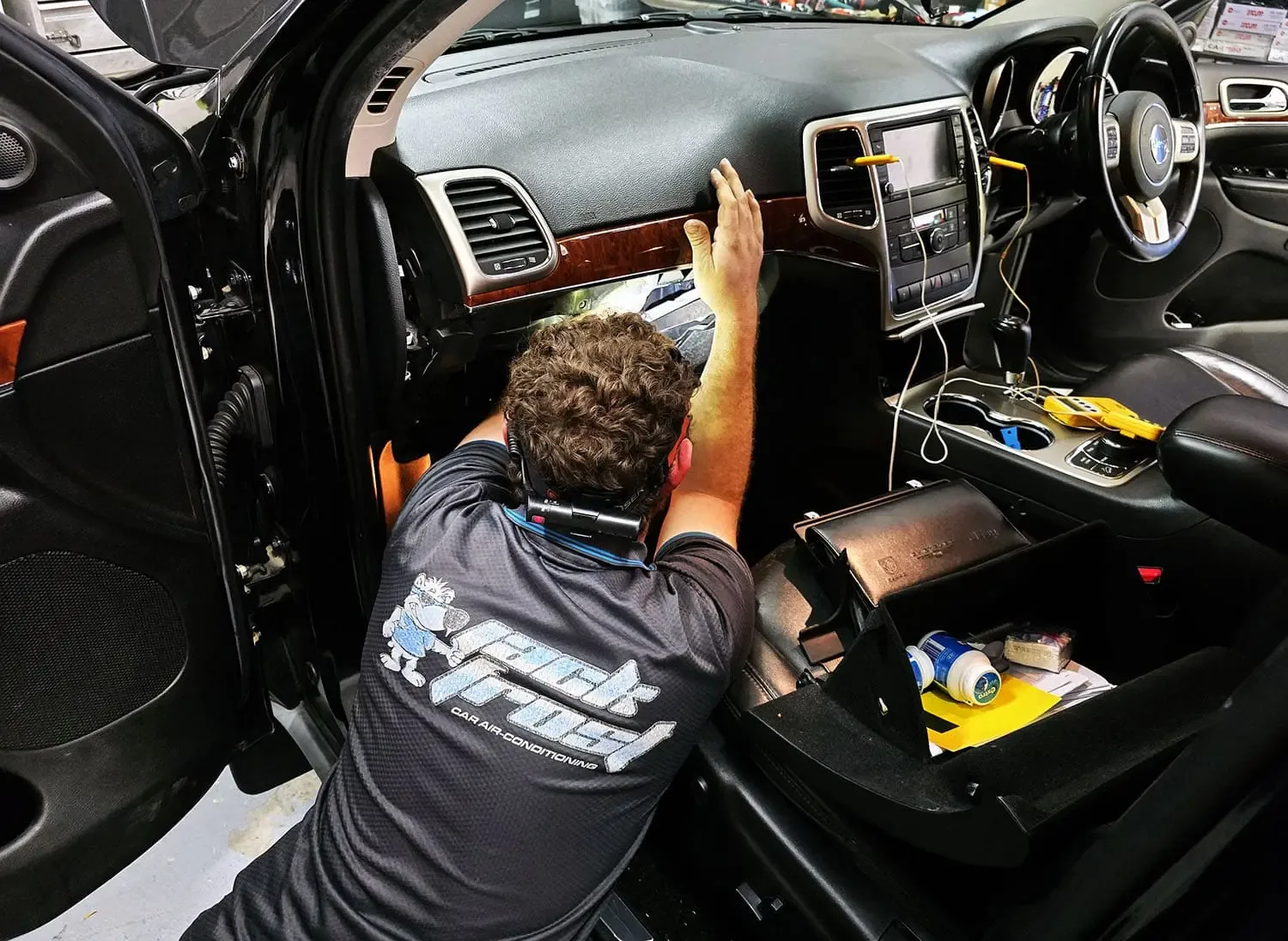
Condenser performance
A new condenser will not fix a failed fan or unresolved contamination.
We look at the conditions around the component so the repair addresses why heat rejection or refrigerant flow has broken down.
Fans and clean fins are critical when the vehicle is stationary.
Compressor debris can make condenser replacement part of a larger repair.
Final checks confirm system pressures, fan operation and cabin cooling after recharge.
Common questions
Condenser replacement FAQs
Clear answers before you book your vehicle with our specialist workshop.
View all FAQs →What does the A/C condenser do?
It removes heat from high-pressure refrigerant before it travels toward the evaporator.
What damages a condenser?
Road debris, impact, corrosion, blocked fins, failed fans and internal contamination can all cause problems.
Can a blocked condenser be cleaned?
External debris may be cleanable, but internal restriction or compressor contamination can require replacement.
Will the system need regassing afterward?
Yes. Opening the refrigerant circuit requires evacuation, recharge to specification and final performance testing.
Start with the right diagnosis
Book your 24-Point A/C Inspection.
Every service starts by checking what the system actually needs. Bring your vehicle to our Mount Gravatt East workshop for a clear diagnosis and the right next step.