
Variable compressor control
Electronic Control Valve Replacement
On many variable-displacement compressors, the electronic control valve regulates output. A valve fault can cause poor or inconsistent cooling without complete compressor failure.
Correct testing can distinguish an ECV fault from low refrigerant, wiring, sensor or internal compressor problems.
What the valve controls
Variable output changes how compressor faults appear.
Unlike a basic on-and-off clutch system, a variable-displacement compressor can alter its output. The electronic control valve helps regulate refrigerant flow and cooling capacity.
When the valve sticks or fails electrically, the A/C may cool intermittently, remain warm or respond poorly to temperature controls. Similar symptoms can come from low charge or other faults, so scan data, electrical checks and pressure behaviour must be considered together.
Why inspection comes first →ECV diagnosis
Signs and tests for a control-valve fault
The goal is to confirm whether the valve, compressor or another part of the system is responsible.
01 Cooling behaviour
A faulty valve may prevent the compressor from producing the expected output.
4 points
Cooling behaviour
A faulty valve may prevent the compressor from producing the expected output.
- Inconsistent or intermittent cooling
- Inadequate cabin cooling
- Cooling changes unexpectedly with engine speed
- Frequent changes in compressor output
02 Control and electrical checks
Commands and circuit integrity are checked before condemning the valve.
4 points
Control and electrical checks
Commands and circuit integrity are checked before condemning the valve.
- Check relevant fault codes and live data
- Inspect wiring and connectors
- Confirm power, ground and control signal where applicable
- Assess response to A/C demand
03 Pressure and compressor assessment
System pressures help show whether commanded output is being produced.
4 points
Pressure and compressor assessment
System pressures help show whether commanded output is being produced.
- Confirm refrigerant charge condition
- Compare high- and low-side pressure behaviour
- Assess compressor mechanical condition
- Rule out restrictions and airflow faults
04 Valve replacement and verification
Where suitable, the valve is replaced and the system is recommissioned.
5 points
Valve replacement and verification
Where suitable, the valve is replaced and the system is recommissioned.
- Recover refrigerant safely
- Replace the confirmed control valve and seals
- Vacuum and recharge to specification
- Clear relevant faults
- Verify stable cooling and pressures
Important: Not every compressor design allows a reliable standalone valve repair. We confirm suitability for the exact vehicle.
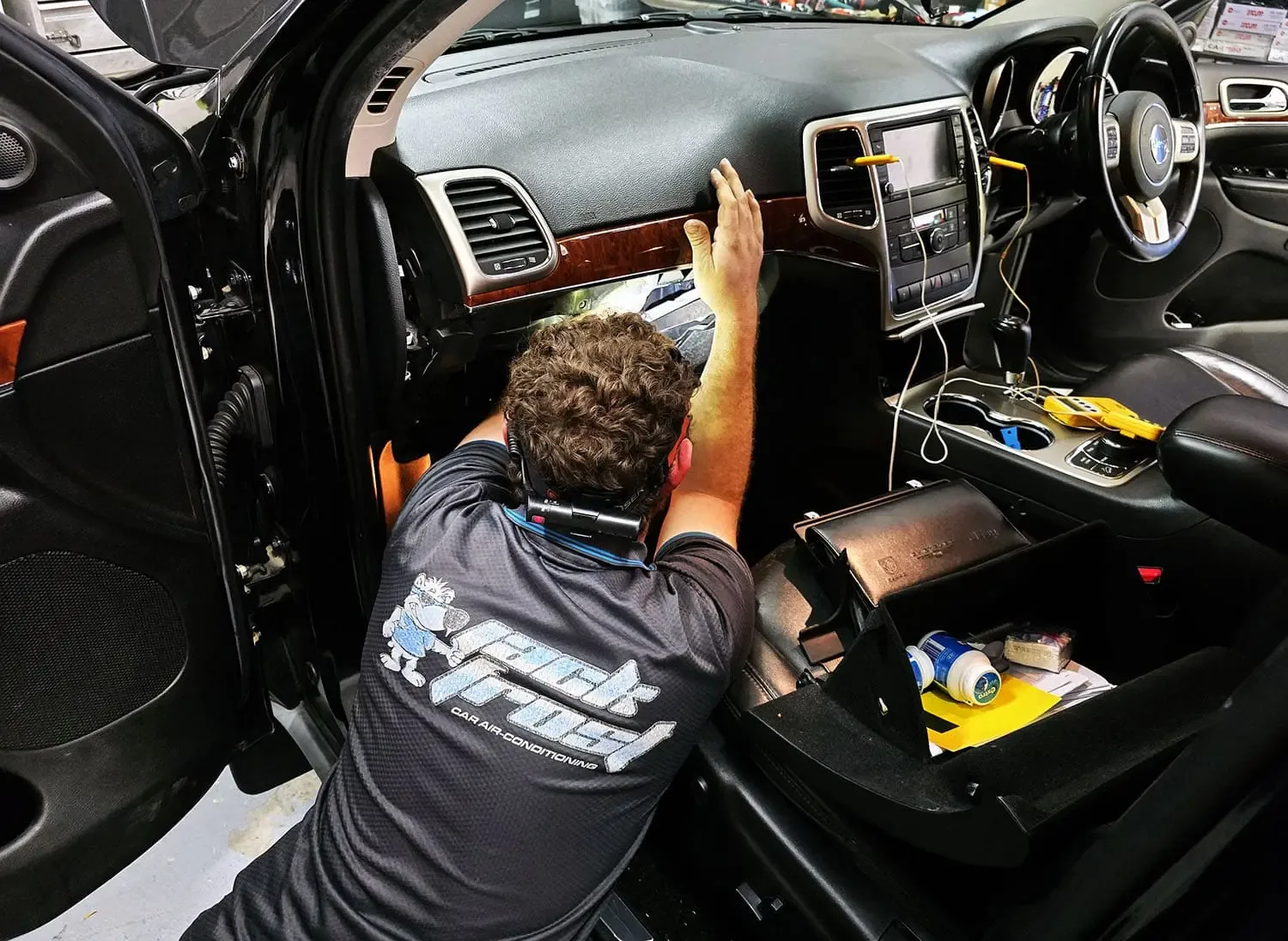
Avoid unnecessary compressor replacement
A precise diagnosis can produce a more targeted repair.
Control faults require both refrigeration knowledge and electrical testing. Pressure readings alone may not explain why a variable compressor is not responding.
Charge, wiring, commands and compressor condition are assessed together.
Valve design and serviceability vary across compressor families.
Commonly reported platforms include selected Ford, Volkswagen, Honda, Toyota, BMW, Hyundai, Holden, Kia, Land Rover and Volvo models.
Common questions
Electronic control valve FAQs
Clear answers before you book your vehicle with our specialist workshop.
View all FAQs →What is an A/C electronic control valve?
It regulates output on many variable-displacement compressors so cooling capacity can change with demand.
Can a faulty valve look like a failed compressor?
Yes. Poor cooling or low compressor output can lead to an incorrect compressor diagnosis if the valve and control circuit are not tested.
Can every ECV be replaced separately?
No. Serviceability depends on the compressor design, vehicle application and condition of the complete unit.
Will the system need regassing after valve replacement?
Where replacement opens the refrigerant circuit, the system must be evacuated, recharged and performance-tested.
Start with the right diagnosis
Book your 24-Point A/C Inspection.
Every service starts by checking what the system actually needs. Bring your vehicle to our Mount Gravatt East workshop for a clear diagnosis and the right next step.