
Sensitive A/C leak diagnosis
Hydrogen Leak Testing
A nitrogen and hydrogen trace gas helps locate small automotive A/C leaks without adding refrigerant to a system that may not hold it.
Hydrogen molecules are extremely small and highly detectable, making this method useful around seals, hoses, condensers, evaporators and difficult leak points.
Why hydrogen trace gas
Some leaks are too small or hidden for visual inspection.
Automotive A/C leaks may release only a tiny amount of gas and leave little visible evidence. Hydrogen is detectable at very low concentrations and can escape through extremely small openings.
The trace mixture is used for diagnosis rather than cooling. It allows the system to be tested before a new refrigerant charge is installed.
Why inspection comes first →Testing procedure
How hydrogen leak testing is carried out
The exact sequence depends on system condition, but the goal is to test safely and narrow the leak to a repairable area.
01 Prepare the system
Establish the system condition before pressure is applied.
4 points
Prepare the system
Establish the system condition before pressure is applied.
- Identify refrigerant type
- Recover remaining refrigerant where required
- Check visible damage and service ports
- Confirm suitable test pressure for the vehicle
02 Introduce trace gas
A controlled nitrogen and hydrogen mixture pressurises the sealed circuit.
4 points
Introduce trace gas
A controlled nitrogen and hydrogen mixture pressurises the sealed circuit.
- Connect compatible service equipment
- Add trace gas at controlled pressure
- Allow the gas to move through the circuit
- Monitor for significant pressure loss
03 Scan the components
A sensitive detector is moved across likely and hidden leak areas.
4 points
Scan the components
A sensitive detector is moved across likely and hidden leak areas.
- Check compressor, condenser and hoses
- Inspect fittings, seals and service ports
- Test around evaporator vents and drain
- Repeat readings to confirm the leak area
04 Report the result
Evidence is used to recommend the appropriate repair or further test.
5 points
Report the result
Evidence is used to recommend the appropriate repair or further test.
- Record the confirmed leak location
- Assess part and access requirements
- Explain the repair pathway
- Quote approved repair work
- Retest after repair where required
Important: Trace-gas testing is one part of leak diagnosis. Pressure behaviour, visual evidence and vehicle-specific access may also be required.
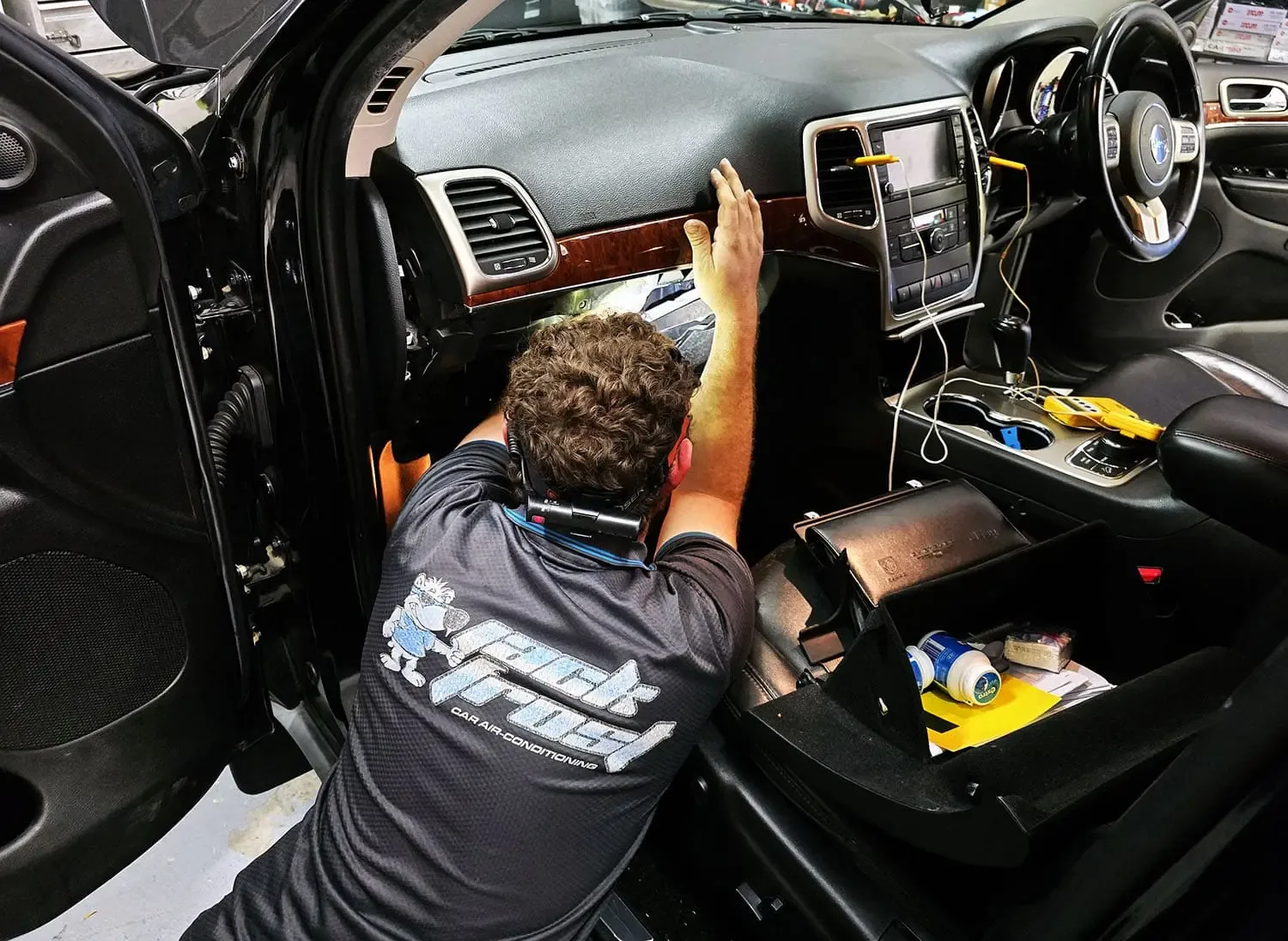
A tool for difficult leaks
Sensitive detection reduces guesswork.
The detector can be used around external components and at HVAC outlets or drains where a hidden evaporator leak may reveal itself.
The suspected system is tested without using refrigerant as the tracer.
A confirmed location helps define the correct part and labour.
After the fault is repaired, the system still needs pressure or vacuum confirmation before recharge.
Common questions
Hydrogen leak testing FAQs
Clear answers before you book your vehicle with our specialist workshop.
View all FAQs →Is hydrogen leak testing safe?
A controlled trace mixture designed for leak detection is used with suitable equipment and test pressures by trained technicians.
Why not use refrigerant to find the leak?
Trace gas allows diagnosis without adding refrigerant to a system already suspected of leaking.
Can it find an evaporator leak?
Testing around vents and the evaporator drain can help detect trace gas escaping from a hidden evaporator.
Does finding the leak include the repair?
Leak testing identifies the repair area. Parts and repair labour are quoted separately before work proceeds.
Start with the right diagnosis
Book your 24-Point A/C Inspection.
Every service starts by checking what the system actually needs. Bring your vehicle to our Mount Gravatt East workshop for a clear diagnosis and the right next step.